
Free Quote! (416) 346-9111
Window Options
Every window I install is built to order. That means you get to pick the details. Here is everything you can choose from, and my honest take on what actually matters and what you can leave to me.
 Colour Finishes13 standard colours plus 42 custom, factory-applied and fade-resistant.
 Glass OptionsOver 15 configurations for warmth, privacy, safety and noise.
 GrillsProfiles and layouts to match the style of your home.
 SpacersMetal-free, dual-seal warm edge that cuts condensation.
 Jamb SizesFrame depth matched to your wall so it sits flush.
 Exterior CasingsTrim profiles, sizes and colours for the outside.
 BrickmouldsLead-free uPVC where the window meets brick or siding.
Colour Finishes
Thirteen standard colours, plus 42 more in custom colour. All factory-applied and tested to hold their tone through Canadian sun and cold without fading, cracking or peeling. Click any colour to see it on the window.

Standard colours
Plus 42 More in Custom Colour
Beyond the standard palette, I can have your windows finished in any of these custom colours. They match the shades used on siding, trim, soffit and eavestrough across Canada, so your windows tie into the rest of your exterior instead of fighting it. Click any swatch to see it on the window above.
Custom colour matching is available if you need to match something specific on your home.
You can have one colour outside and a different one inside. Dark outside with white inside is the most common request I get, and it looks sharp on almost any house.
Glass Options
This is the choice that changes how your home actually feels day to day. There are over fifteen configurations.
How the sealed unit works
Every window I install is a sealed insulated glass unit, not a single sheet of glass. That sealed, gas-filled pocket between the panes is what does the real work, and the exact build is what decides how warm and quiet your home ends up.
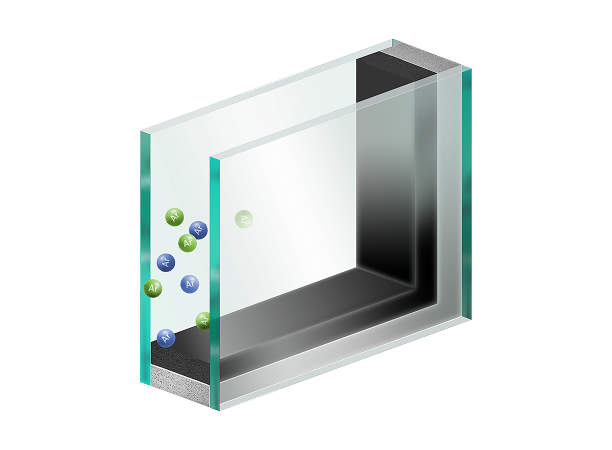
The sealed insulated glass unit
Two or three panes are locked around a warm-edge spacer, the cavity is sealed tight and filled with argon, and the whole assembly is built to hold up to temperature swings, moisture and the daily load a window takes. That sealed pocket of gas slows the heat moving through the glass, cuts the outside noise, and keeps the cold off the inside face so you are not fighting condensation all winter.
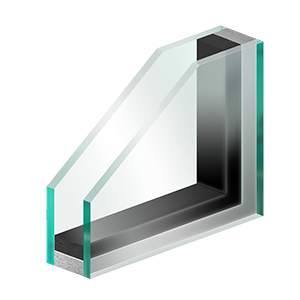
Double pane, 13/16"
Two panes of glass separated by a sealed 13/16 inch cavity filled with argon. This is the standard build and it covers most homes in the GTA well. It gives you a balanced mix of warmth, noise control and price without adding a lot of thickness or weight to the sash. It holds your heat in through the winter, keeps the summer sun from cooking the room, and quiets down everyday street and neighbourhood noise. If you are replacing old single or basic double glazing, this alone is a big step up.
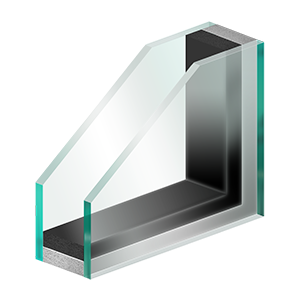
Double pane, 1-3/8"
The same two-pane idea, but with a deeper 1-3/8 inch cavity between the panes. That larger sealed gap slows heat transfer more than the standard unit and does an even better job on sound, so the house stays more comfortable and quieter inside. It is the option I point people to when they want more performance than the standard double pane but are not ready to jump to triple. A smart pick for colder walls, exposed sides of the house, or anyone who wants to push past the basic energy numbers.
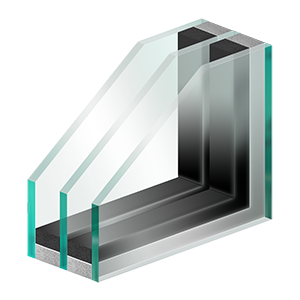
Triple pane
Three panes of glass with two sealed, argon-filled cavities. This is the warmest and quietest glass I offer. The extra pane and second cavity give you more barriers against heat loss, so it is the strongest choice for energy efficiency, comfort and condensation resistance. It weighs more and costs more, so it is not for every opening. But for a cold north wall, a bedroom on a busy street, or a home you want as efficient as it can be, nothing else I install comes close.
Argon gas fillAn inert, non-toxic gas sealed between the panes in place of plain air. Argon is denser than air, so it slows the heat moving through the glass and raises the insulating value of the whole unit. You never see it and never maintain it, it just works.
Warm-edge spacerThe strip that holds the panes apart at the edge of the glass. Mine is a foam-based, metal-free, dual-seal warm-edge spacer, so cold does not track straight through metal to the inside of the glass. It keeps the glass edge warmer, cuts condensation and dampens noise. More on this in the Spacers section below.
How Low-E glass works
Low-E is a microscopic metal coating on the glass, and it is the reason a good window feels warm to the touch in January. In winter it reflects your heat back into the room instead of letting it escape through the glass. In summer it bounces the sun's heat back outside before it cooks the room. Same coating, working both directions, all year. The daylight still comes through, the heat stays where you want it.
Visible Light
Radiant Heat Stays Inside
UV Light
Solar Heat


Low-E coatings
A different coating suits a different side of your house, so I spec it room by room instead of putting the same glass everywhere.
 LoĒ-180Built for cold climates. It holds the most heat inside, so it is the pick for your worst winter walls.
 LoĒ²-272The balanced, year-round coating. Good heat retention in winter with solar and UV control in summer. My default for most homes.
 LoĒ³-366Maximum solar control. It blocks the most summer heat and UV, so it suits big south and west-facing glass.
 LoĒ-i89An interior-side coating that adds extra thermal insulation on the inside pane for better cold-weather performance.
Safety glass
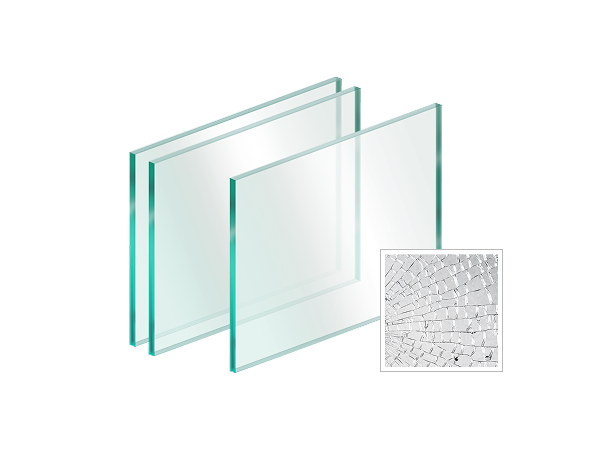
Tempered
Heat-treated glass that is much stronger than regular annealed glass. If it ever does break, it shatters into small blunt pieces instead of long sharp shards, which is why building code requires it in certain spots. I use it where code calls for it, next to doors, in large low windows, and in wet areas like bathrooms.
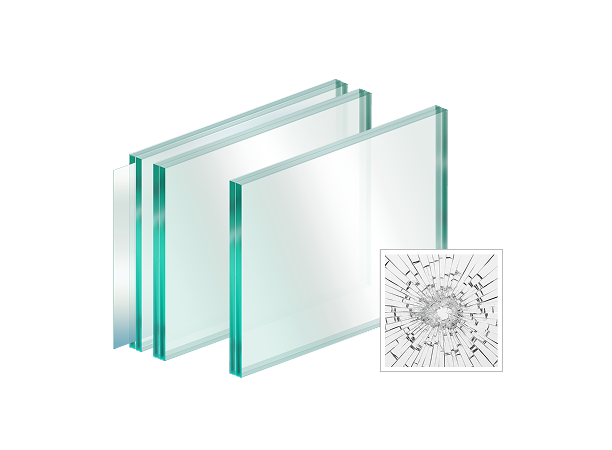
Laminated
Two panes bonded together with a tough interlayer in between. When it is hit, the glass stays stuck to that layer instead of falling out, so it resists break-ins and holds together on impact. It also cuts outside noise more than regular glass. Good for ground-floor windows, street-facing rooms, and anywhere security or extra quiet matters.
Privacy and decorative glass. Patterned or frosted glass that still lets the daylight in but stops anyone seeing through. This is what you want in a bathroom, over a tub, on a front entry, or any window where you want the light without the whole street looking in. These are the common patterns. More textures are available if you want something specific, just ask.


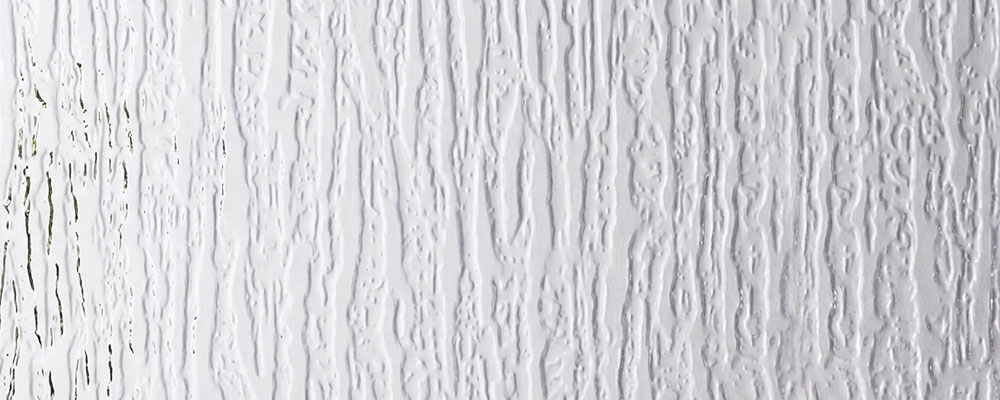



Every privacy pattern still takes the same Low-E coating, argon fill and warm-edge spacer as the rest of your windows. You give up the view, not the performance.
The right glass is not the same for every window in your house. A south-facing window wants a different coating than a north-facing one. I spec it room by room and tell you why.
Grills
Grills are the bars that divide the glass into panes. Purely a look, but they change the character of a house.


- Placement. Between the glass, on the surface as simulated divided light, or interior only.
- Layouts. Colonial, Prairie, England, Elegant, Heritage, Diamond, Classic, Cathedral, Traditional and Victorian. Custom layouts on request.
Most people pick between the glass. There is nothing to dust and nothing to clean around.
Spacers

The spacer is the strip that holds the two panes apart at the edge of the glass. You will never see it, and it matters more than almost anything else on this page.
Old windows used aluminum spacers. Metal carries cold straight to the inside face of the glass, and that is exactly where frost and condensation start. The windows I install use a foam-based, metal-free, dual-seal warm edge spacer. It keeps the glass edge warmer, cuts condensation, dampens noise, and absorbs the seasonal movement that eventually breaks seals.
Jamb Sizes
The jamb is the depth of the window frame. It has to match the thickness of your wall so the window sits flush with your interior trim. Available in vinyl, solid vinyl and wood extensions, in common depths around 1-1/2, 2-3/8, 3-1/4 and 4-5/8 inches.
This one is not a shopping decision. I measure your walls and spec it so it fits properly.
Exterior Casings


Casing is the trim that frames the window on the outside. Vinyl casings come in 2-3/8 inch and 3-3/8 inch widths, in Colonial with round rosette, Colonial with modern rosette, and Flat profiles.
Brickmoulds


Brickmould is the trim where the window meets your brick or siding. It seals that transition and finishes the look. Lead-free uPVC, so it will not rot or need painting, and it comes in multiple sizes and colours to match your window.
The Honest Part
Most of this you will never have to think about. Tell me how you want the windows to look and how warm and quiet you want the house, and I will spec the glass, the spacer, the jambs and the trim to suit your home. Then I will walk you through why I chose each one, so you are not just taking my word for it.